
Three sites brought together in one mechanised distribution centre
The situation
After the merger of two wholesalers, the company operated from three sites. Stock was scattered, orders were picked in several places and each site had its own way of working. The board wanted to know the optimal logistics set-up — not just for today, but including the desired growth and higher quality.
What we did
We calculated three routes: expanding at an existing site, outsourcing to a logistics service provider, or building new.
Expanding was ruled out. There was too little room for growth, and it could not be done without halting the running operation. Outsourcing solved the space problem but gave away control of quality, precisely where the company sets itself apart. A new build remained — and on the numbers it also proved the best outcome.
What was built
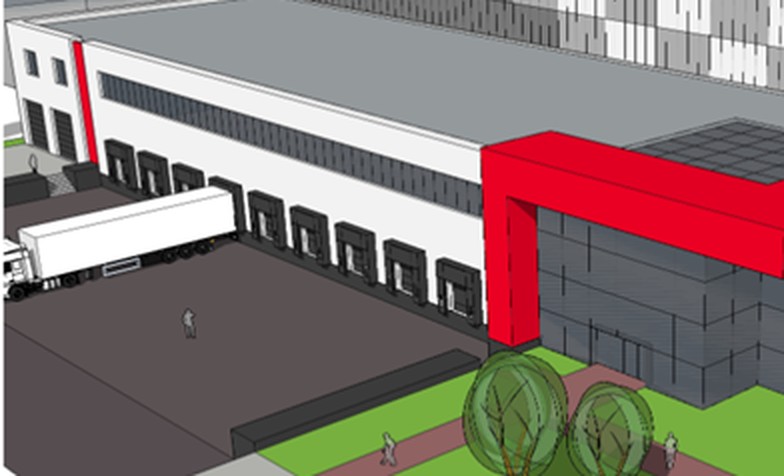
A hall twenty metres high with narrow-aisle storage. Unmanned AGVs handle the pallet work, automated forklifts work in dispatch, and manned order pickers serve the zones where that is more efficient. For small items, three lifts bring the articles to a pick station instead of the picker to the article.
The set-up was chosen so that the operation can run twenty-four hours a day. That was not a technical wish but a commercial one: without that lead time, the growth in e-commerce could not be served.
Why we show this case
Because the most interesting decision was not about technology. The question was whether to expand, outsource or build — and that is a board question, not a logistics one. We made the three options comparable on investment, room for growth and continuity, so that a decision could be taken. The mechanisation followed after that.
