Supply Today
ApproachPillars & PartnersCasesInsightsAbout usContactNL
Case · Transformation

The mechanisation was ready — the ERP that had to drive it was not

>80%
Productivity on the mechanised processes, according to the business case.
Sector
Trading and packing, exotic fruit and vegetables
Scale
Revenue around €0.5 billion
Our role
Project management of logistics design and implementation, reporting to the COO
Duration
2019–2023, from master plan to start-up
Pillar
Mechanisation & implementation

The situation

The market grew and the company grew with it. To handle that growth, the distribution centre had to be expanded from twenty thousand to twenty-five thousand square metres. But the board set one condition: more square metres alone was not enough. The processes to come also had to be more efficient than the processes already there.

That made it a different project from a construction project. The building, the layout, the mechanisation and the systems had to come together in one design — and that design had to be in place before the first pile went into the ground.

The bottleneck

There had already been a master plan phase. The internal project team had not arrived at the solutions the company needed, and the external party leading that phase had too little connection with the people in the company who would have to work with it. So there was a plan, but it had no support.

The managing director summed up our assignment in one sentence:

“Pull this project for us — without letting too many carriages get hitched to your engine.”

That is exactly the tension in a project of this size. An expansion affects everyone, and everyone has a wish. Hitch them all on and you stop moving; ignore them all and you get a building the organisation does not fit into. The task was to keep moving, while taking along the carriages that really mattered.

This was solved by forming the project team from the company’s own organisation: the warehouse manager, the production manager, the IT manager and the head of maintenance. We reported to the COO, with weekly feedback to the CEO and CFO. Those who would have to run it were at the table when the choices were made — and that is exactly what had been missing in the previous master plan phase.

Our approach

Four phases, from the first question to handover

Phase 1
Start from the bottleneck
At the start, the CEO explicitly asked for the master plan to be critically reviewed again. We did this by recalibrating the baseline data and drawing up a Material Flow Diagram, which re-substantiated the logistics concept and adjusted it in places. The question was not how many square metres had to be added, but which processes in that building would run differently — and whether the expansion made sense at all without that change. Actively involving the managers concerned in this recalibration produced two things at once: confidence in the content and ownership within the organisation. The revised master plan was then broadly accepted and became the basis for both the building design and the logistics layout.
Phase 2
Design the solution that fits
Together with the architects, we developed the building concept, from block plan to final design, with the logistics layout as the starting point rather than something filled in afterwards. Within it, we chose the mechanisation: delta-robot lines for automatically packing avocados, fully automated pallet storage and internal transport. We also supported the procurement from the chosen supplier.
Phase 3
Get it working on the floor
Project management across the whole implementation, with the IT integration as the focal point. The mechanisation was to be controlled from a new ERP system that had to go live eighteen months before completion. It turned out differently — see below.
Phase 4
On board until it delivers
Commissioning, start-up and handover to the permanent organisation. The head of maintenance was on the project team from the start and was therefore already involved in the choices around the installation. Before the assembly phase, a specifically assigned maintenance engineer joined the maintenance team, and together with the supplier the management and maintenance organisation was set up: agreements on first- and second-line support for breakdowns, knowledge transfer and an integrated maintenance plan. As a result, handover did not only happen at the end — during construction, the technical organisation was already prepared to manage the installation independently.

What did not go right straight away

The new ERP was to be taken into use about eighteen months before completion of the new building. We were not involved in that project. In the end the go-live did not succeed — not delayed, but not successful.

That left us in an unworkable situation. A fully mechanised operation was ready that had to be controlled by a system that did not exist, and the existing ERP system had never been intended for that.

The solution was a low-code middleware layer, linked to the existing ERP system. Not an elegant architecture, but a working one: the entire mechanisation could be controlled and started up on it. The building opened on the agreed date.

We mention this because it shows where the value of project orchestration lies. Not in the plan that is right beforehand — anyone can write that down — but in what happens when an adjacent project collapses and the completion date stands.

The figures the decision was based on
Productivity, mechanised processes
manual packing and internal transport
↓
>80%
compared with the existing situation
Project budget
approved budget
↓
−1%
delivered within budget
Payback, robotic packing
investment in delta-robot lines
↓
2 years
the fastest-returning part of the investment
Payback, new build
total investment
↓
3–4 years
including building and mechanisation
Measurement note

The figures come from the client’s business case for the period 2020–2023 and are estimates made beforehand, not outcomes measured afterwards. The comparison is always with the situation as it was before the expansion.

The 81% refers to productivity on the processes that were mechanised — packing, pallet storage and internal transport — not on the operation as a whole.

The project budget is the only exception: it compares the approved budget with actual spending at completion, and is therefore a realised figure.

The payback periods were calculated by the client on the basis of its own operating figures. We did not measure their realisation ourselves.

Why it kept working

At handover, particular attention went to the maintenance department. A mechanised operation is only as reliable as its maintenance, and that maintenance has to be carried by people who work there themselves — not by an external service provider who only comes when something stops.

That is ultimately the sharpest test for programmes like this: not whether the installation works at completion, but whether the organisation keeps it running itself afterwards.

Does this sound familiar?

One of these four is enough.
You face an expansion, and more square metres alone will not solve it.
There is a master plan that lacks internal support.
Your project depends on another project you do not control.
You want your own people to keep the installation running after start-up.

Who led the project

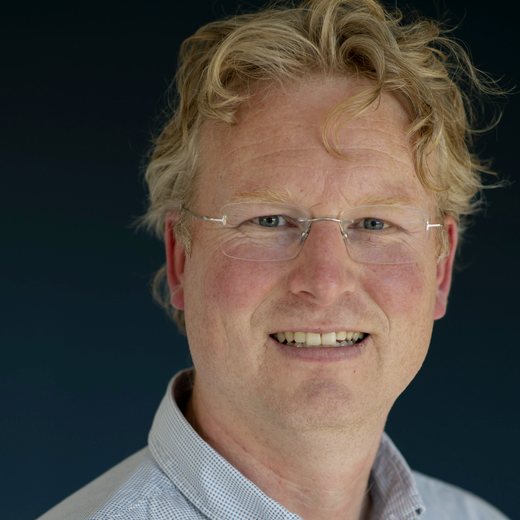
Portrait of Niels Kruijer
Niels Kruijer

We do not name our clients — that is customary in this sector, and it is an agreement our clients can rely on.

More about the team All cases
Next step
Curious what this means for your operation?
A one-hour introduction is enough to see whether there is something to gain. No obligation, and afterwards you know where you stand.
Arrange an introduction
Supply Today
We orchestrate your operational transformation. From technology to a working operation — for over 30 years.
© 2026 Supply Today · Privacy policy
Navigation
ApproachPillars & PartnersCasesInsightsAbout usContact
Contact
info@supplytoday.nl+31 71 785 10 37Van Berckelweg 38, Noordwijk, the Netherlandssupplytoday.nl